Upcoming exhibition · Art Gallery
Riverine
14 November 2026 to 3 January 2027
Opening: Saturday, 14 November at 2PM
Set across 1,000 hectares in Victoria’s Wimmera, Bonnie Brae is a family-owned farm managed by Don, Prue and Dougal McAllister. Since purchasing the once-degraded property in the 1980s, the family has worked to restore its ecological health, replacing conventional farming methods with regenerative practices that combine cropping, livestock and biodiversity conservation.
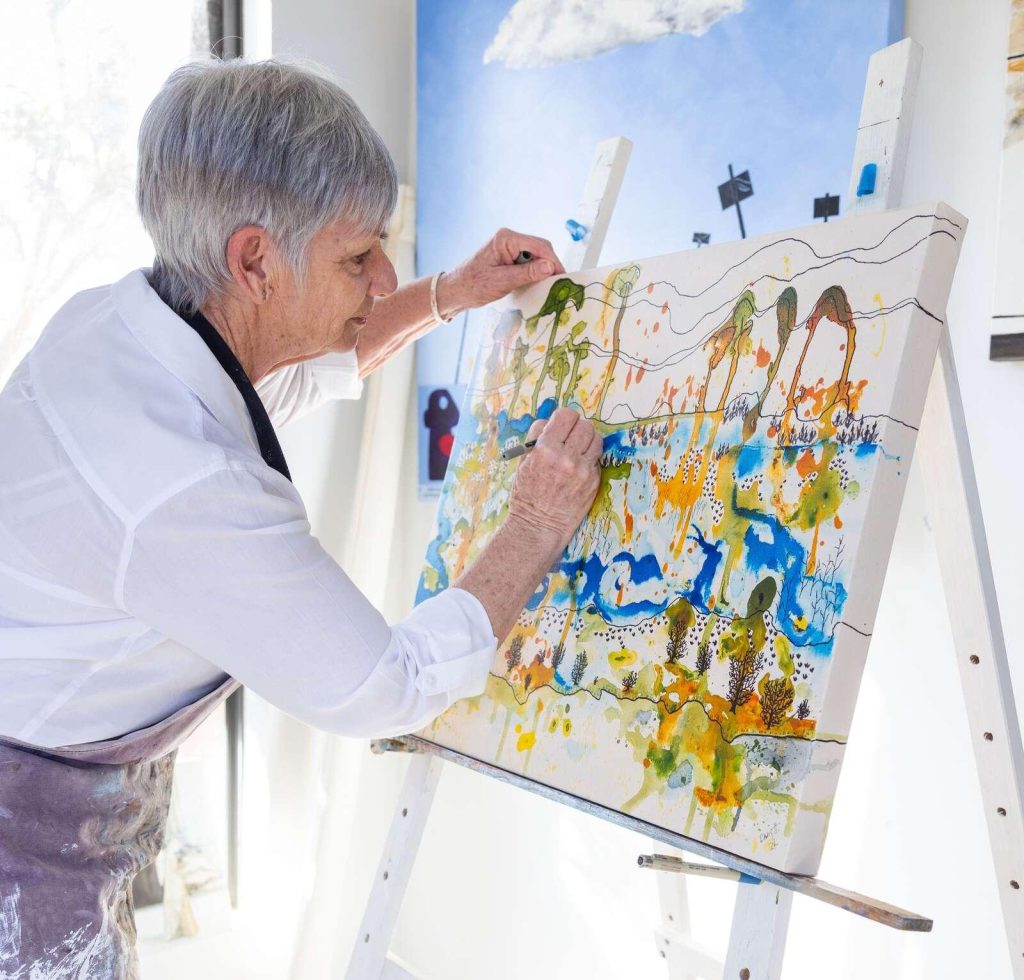
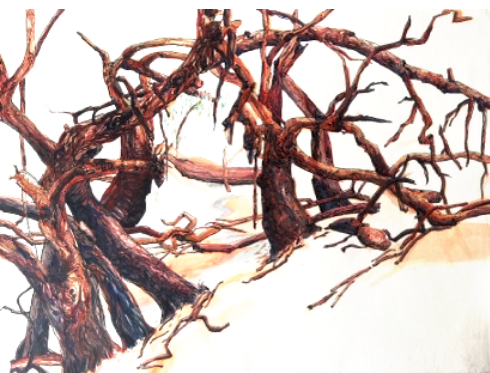
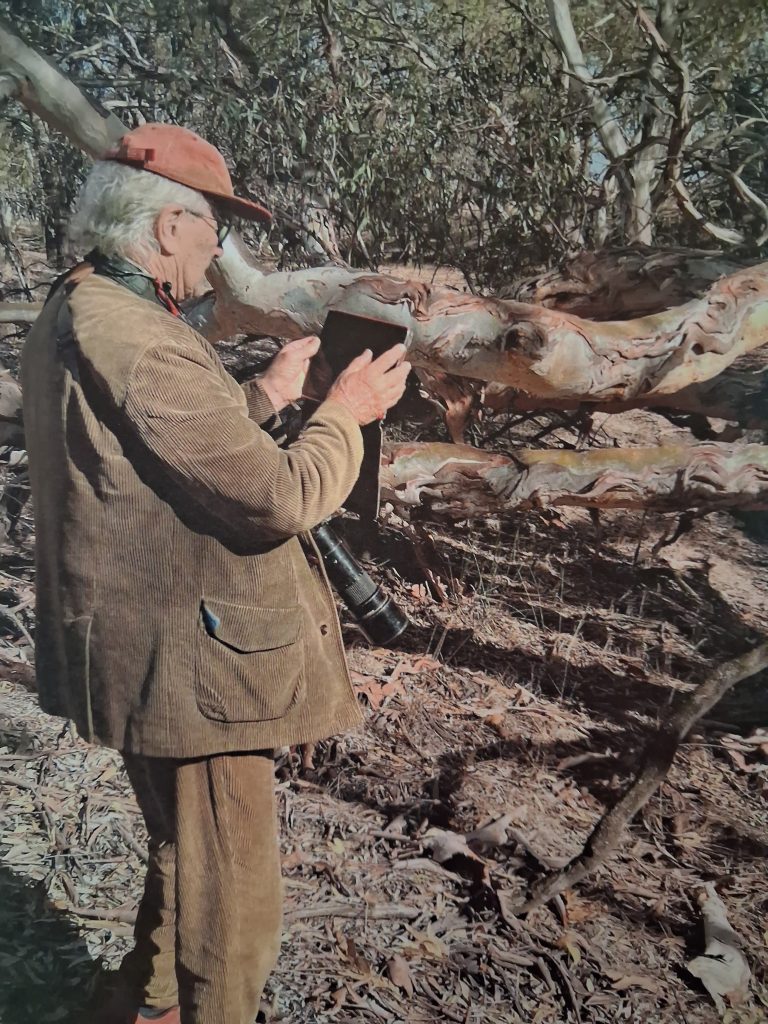
For the past four autumns, artists and long-time friends Raymond Arnold, Ian Westacott and John Wolseley have gathered beside the Banyena / Richardson River, camping and working within the landscape. Through paintings and etchings, they have explored the changing waterways, surrounding vegetation and distinctive character of the region. Helena Demczuk and Jonathon Westacott have also joined the group during these creative gatherings.
Their work looks beyond the landscape’s physical beauty to consider its history, ecology and transformation. Drawing inspiration from the longstanding custodianship of the Dja Dja Wurrung and Wotcheballok peoples, alongside the profound changes brought by European settlement, the artists examine humanity’s relationship with the natural environment. Together, their works invite reflection on our responsibility to care for, protect and restore the land for future generations.
The exhibition
Riverine
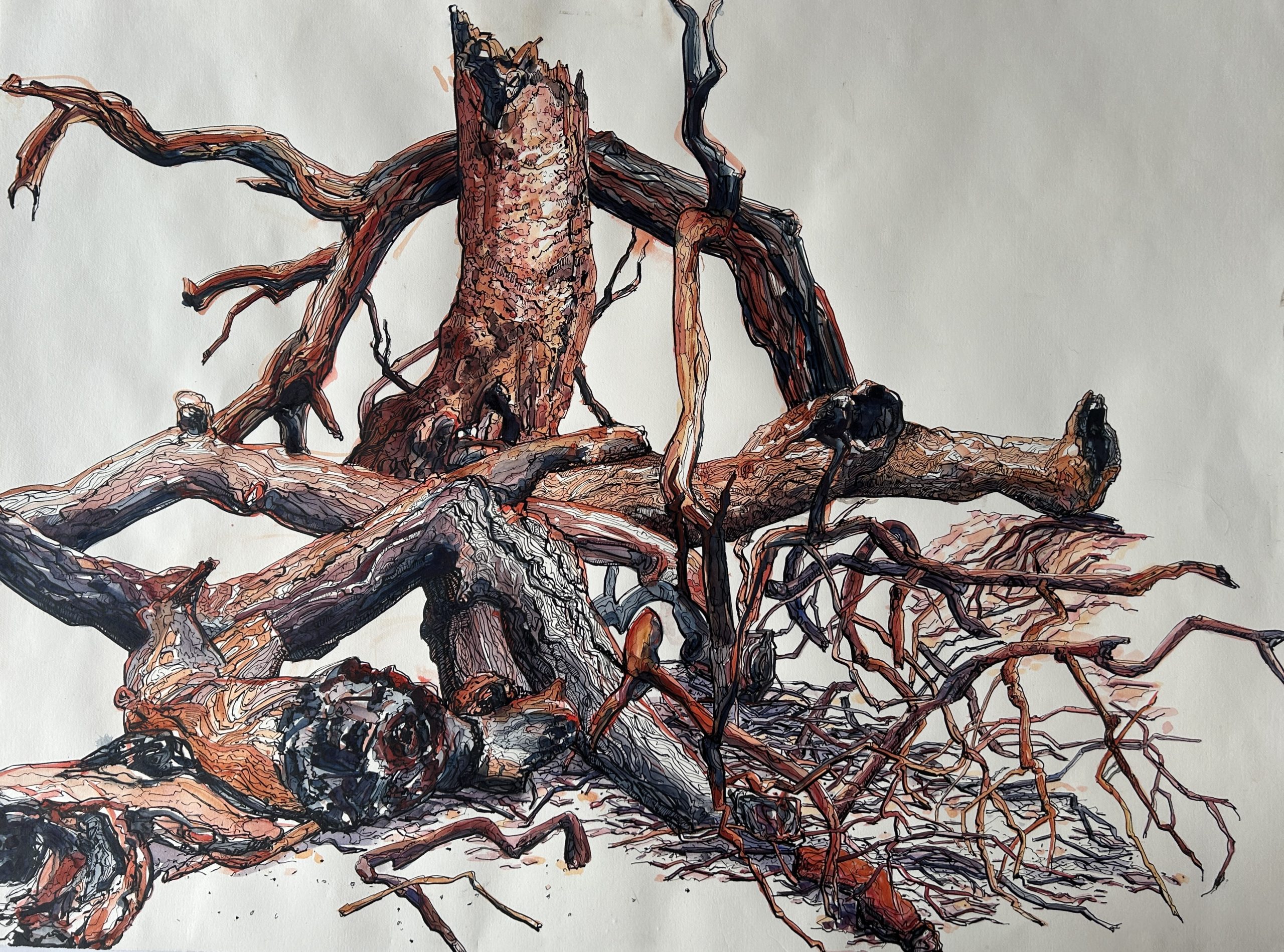
John Wolseley
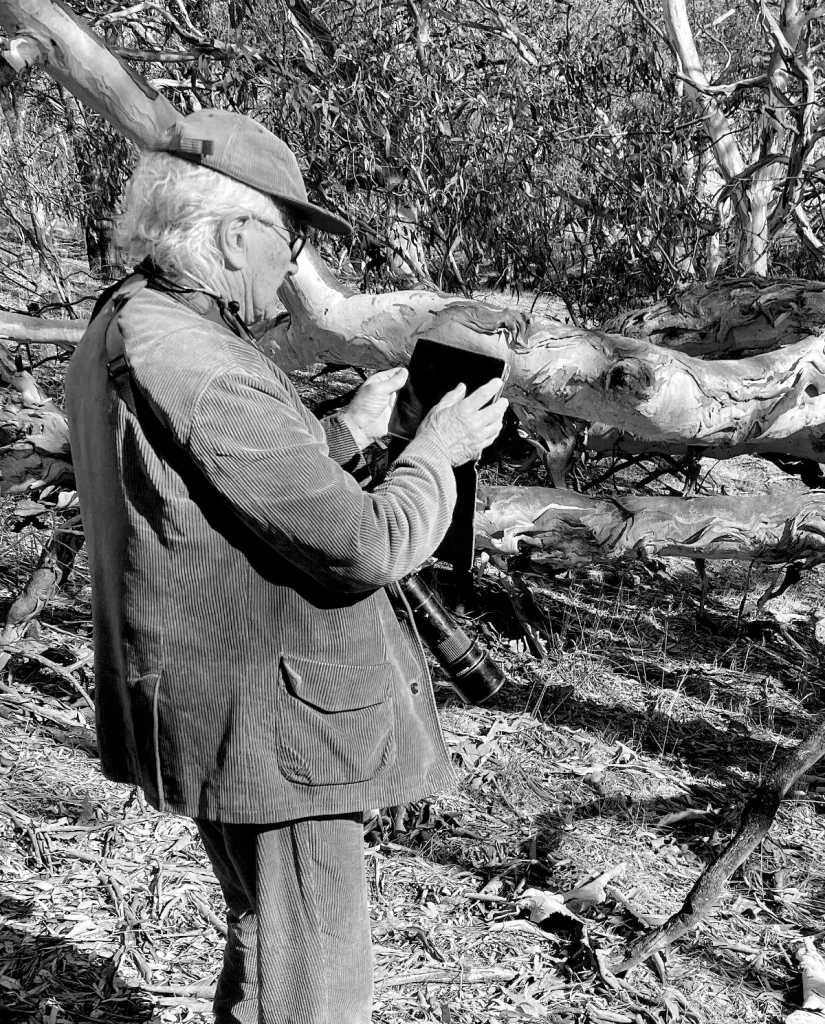
John Wolseley (born 1938, Somerset, UK) moved from the UK to Australia in 1978, living and working across the continent until settling in the Whipstick Forest near Bendigo. His work has been acknowledged and celebrated through numerous exhibitions, grants and commissions. In 2005, he received an Honorary degree of Doctor of Science from Macquarie University and the Australian Council Visual Arts Emeritus Award. In 2016 the National Gallery of Victoria presented a major solo exhibition, John Wolseley: Heartlands and Headwaters. He has been curated into important group exhibitions, including the 8th Biennale of Sydney (2012) and most recently, The National (2021) at the Museum of Contemporary Art, Sydney and Still Life (2022) at Buxton Contemporary. In 2016 the National Museum, Canberra staged Midawarr Harvest, which was the culmination of Wolseley’s decade-long collaboration with the celebrated Yolŋgu artist Mulkun Wirrpanda.
The exhibition
Riverine
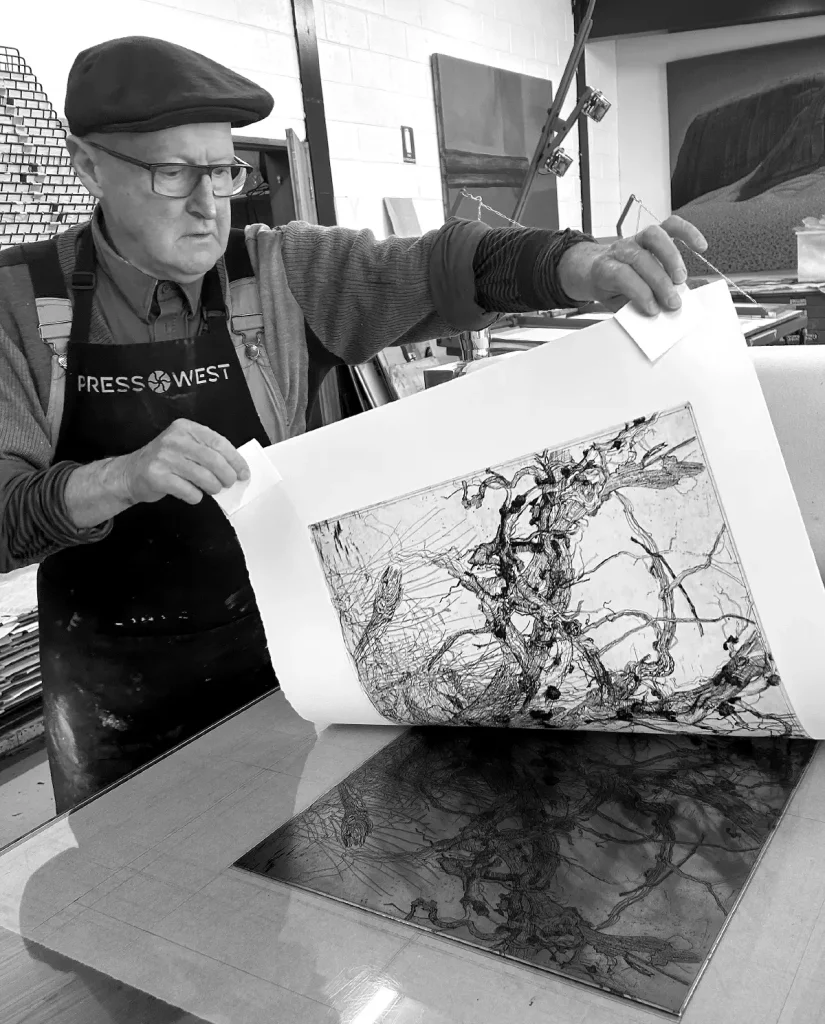
Raymond Arnold
Raymond Arnold’s connection with Tasmania began in 1967, when a school walking trip took him from suburban Melbourne into the rugged mountains surrounding Queenstown. That first encounter shaped a lifelong relationship with the island’s western landscape. After moving to Hobart to teach in 1983, he became involved in environmental activism, creating prints and posters that reflected his concern for Tasmania’s threatened wilderness. His career later took him to France, where he worked at the renowned Atelier Lacourière et Frélaut in Paris, before settling in Queenstown in 2006.
An accomplished printmaker, Arnold explores the complex relationship between landscape, industry and time. His intricate etchings record mountains scarred by mining alongside signs of regeneration, finding beauty without overlooking environmental damage. In his evolving series *Elsewhere World*, individual copper plates combine into expansive panoramas of rock, vegetation and shifting skies. Working directly onto the plates, he builds and revises each image through a patient process of finely drawn lines, balancing intimate detail with a powerful sense of scale.
Together with artist Helena Demczuk, Arnold established Landscape Art Research Queenstown (LARQ), creating a place for exhibitions, artist residencies and creative exchange. His commitment to Queenstown extends beyond documenting its landscape to welcoming others into a deeper conversation about its history and future. Through his art and community involvement, Arnold continues to bear witness to a place marked by extraction, resilience and renewal.
The exhibition
Riverine
Ian Westacott
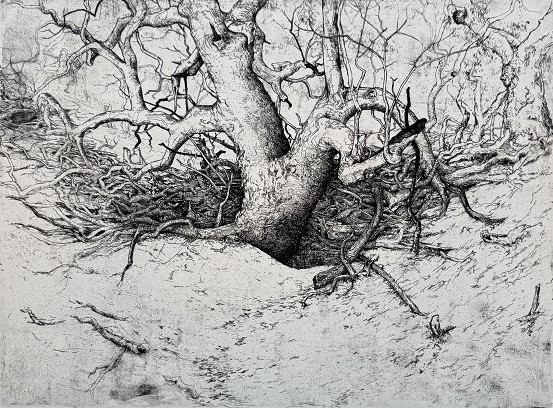
Born in Myrtleford, Victoria, Ian Westacott is an internationally recognised Australian printmaker whose intricate etchings explore the beauty, character and history of trees and the natural landscape.
Growing up in the foothills of the Australian Alps, Ian developed a connection with the natural environment that continues to influence his artistic practice. He studied Art and Design at Wangaratta Technical College before completing a Graduate Diploma in Fine Arts at the Victorian College of the Arts in Melbourne in 1987.
In the early 1990s, Ian moved to Scotland, where he established his artistic practice and taught printmaking. He now lives and works in the Scottish Highlands.
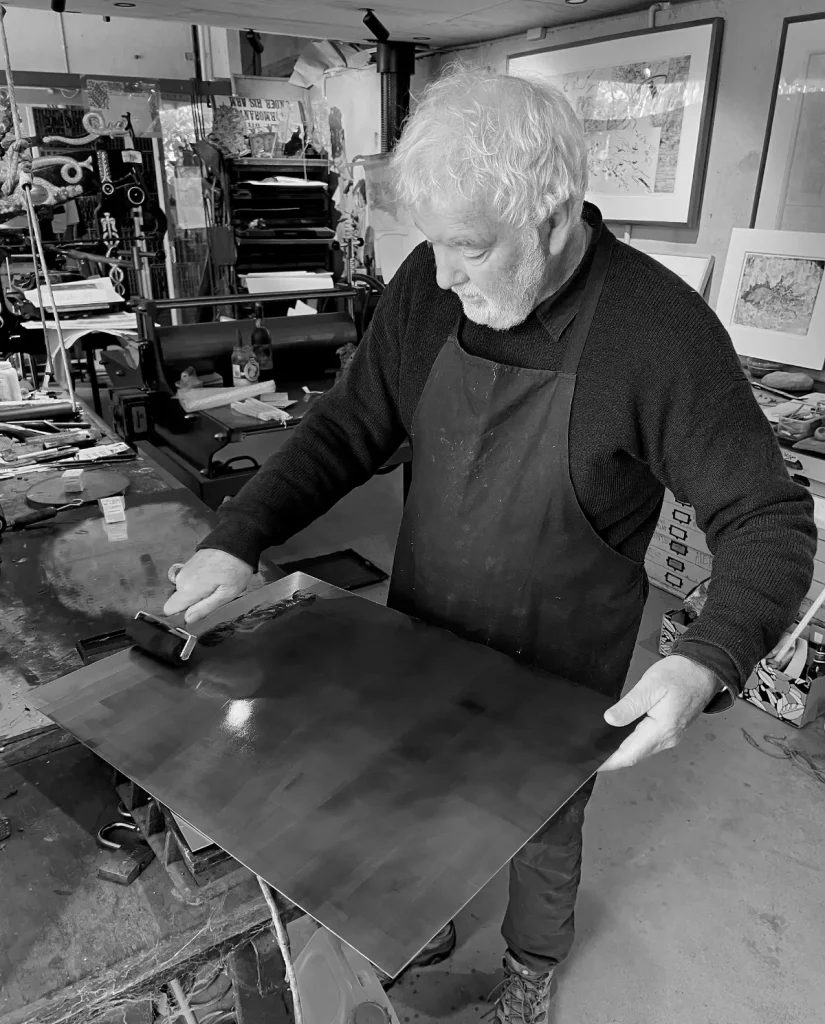
Working directly from life, Ian takes his etching plates into the landscape, drawing his subjects on location rather than relying on photographs or preliminary sketches. Back in his studio, he develops these observations through layers of carefully considered lines and marks, creating richly detailed images that reveal the individual character of each subject.
Trees have become a central focus of his work. More than botanical studies, his etchings explore their presence as living witnesses to history, carrying the marks of time, memory and human experience. Through their distinctive forms, textures and scars, Ian captures the relationship between nature, place and the passage of time.
His work has been exhibited extensively throughout Australia, Scotland, England and France, including exhibitions at Australian Galleries in Melbourne, the Royal Botanic Garden Edinburgh and galleries throughout the Scottish Highlands.
Ian's work is represented in significant public collections, including the National Gallery of Victoria, Warrnambool Art Gallery and Aberdeen Art Gallery in Scotland. His achievements include the Gold Coast Acquisitive Prize, an ANZ International Fellowship and the Royal Scottish Academy's Roy Wood Prize for Printmaking in 2022.
Ian has also collaborated extensively with fellow Australian printmaker Raymond Arnold. Their shared artistic interests in landscape, memory and the expressive possibilities of etching have led to exhibitions in Australia and internationally.
For *Riverine: Three Old Etchers and the Ancient Trees of the Wimmera*, Ian joins Raymond Arnold and John Wolseley in exploring the remarkable river systems and ancient trees of Victoria's Wimmera region. Developed through repeated visits to the landscape, the exhibition celebrates the ecological and cultural significance of these environments and the importance of their preservation.
Through his remarkable attention to detail and mastery of the etched line, Ian invites viewers to see trees not simply as elements of a landscape, but as individual characters with their own stories to tell.
The exhibition
Riverine
Jonathon Westacott
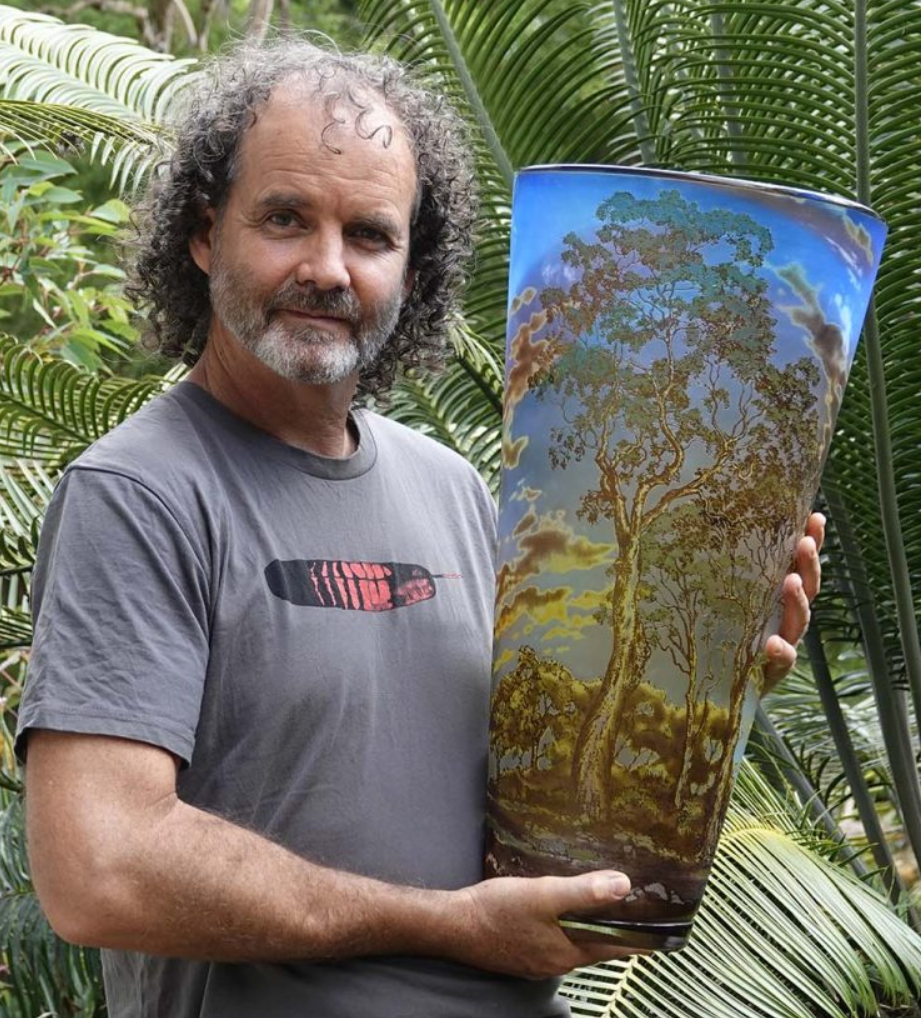
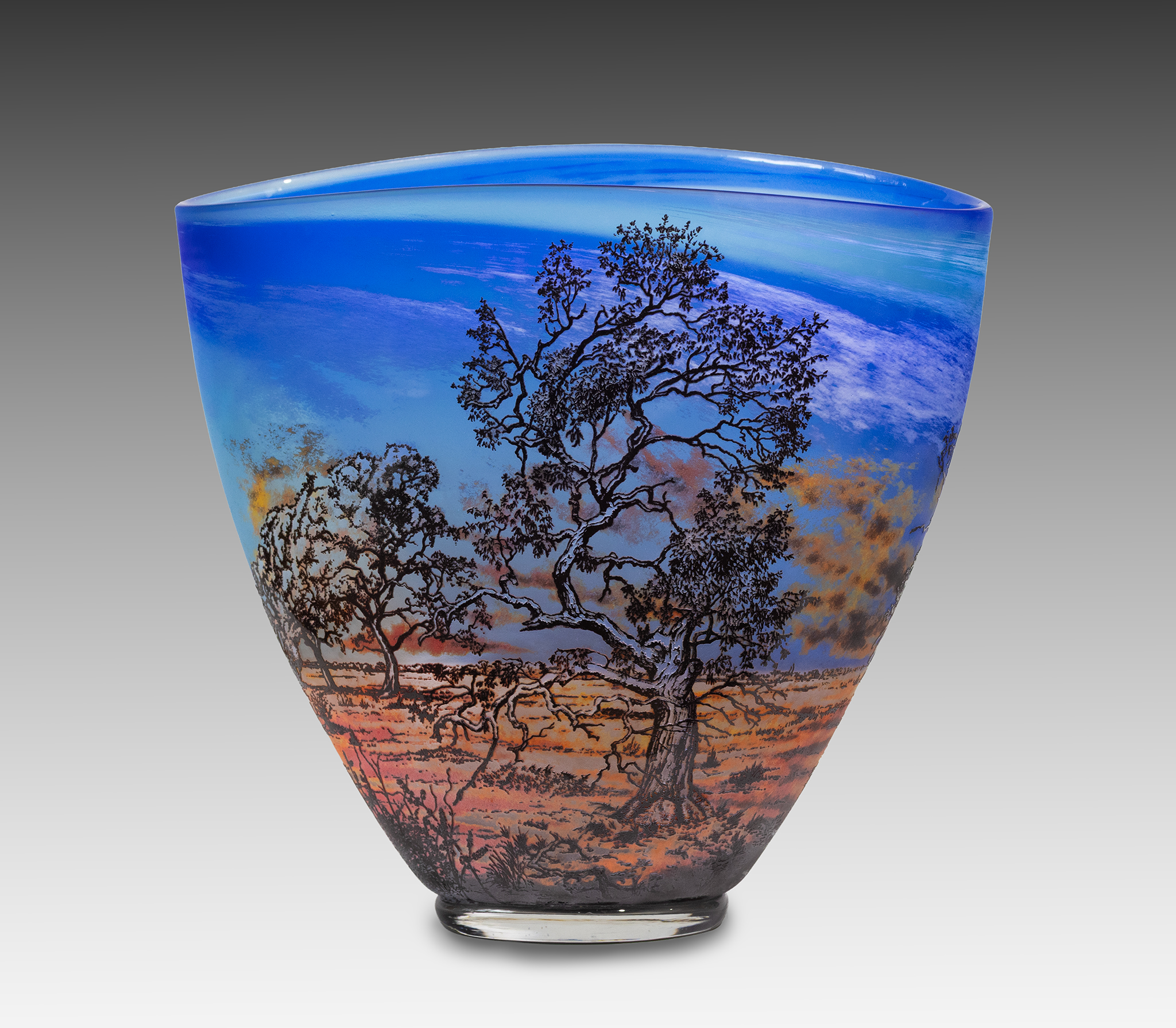
Born in Myrtleford in north-eastern Victoria, Jonathon Westacott is an accomplished Australian visual artist whose practice spans glassblowing, painting, drawing and carving. With nearly four decades of artistic experience, his work reflects a fascination with the natural world, intricate detail, form and colour.
Jonathon's creative practice is deeply connected to his exploration of remote and wild landscapes. Bushwalking provides both inspiration and an opportunity to observe the often-overlooked details of the natural environment. Birds, animals, trees, insects and the subtle characteristics of a place become subjects for drawings and photographs collected during his journeys.
Back in the studio, these observations are transformed into visual stories through intricate ink drawings, watercolour paintings and carvings on glass. His work seeks to capture more than the appearance of a landscape, preserving the experience, discoveries and memories associated with being immersed in nature.
Jonathon studied Art and Design at Wangaratta College of TAFE before completing a Bachelor of Visual Arts, specialising in hot glass and ceramics, at Charles Sturt University in Wagga Wagga in 1987. He began his professional career with a hot glass traineeship at Adelaide's renowned JamFactory Craft and Design Centre, where he developed his technical skills and artistic practice. He later worked as an independent glass artist and lecturer, teaching glassblowing at the South Australian College of Advanced Education. From 1993 to 2002, Jonathon worked alongside glass artist Chris Pantano, gaining extensive experience in glass design, production and the technical aspects of glassmaking.
In 2004, he established the Sunshine Coast Hot Glass Studio in Yandina, Queensland, followed by Westacott Glass in 2008, based in the Sunshine Coast hinterland. His work has featured in solo and group exhibitions across Australia, including the JamFactory in Adelaide, Noosa Regional Gallery, Caboolture Regional Gallery, Canberra Glass and Kirra Gallery at Federation Square in Melbourne. A career highlight came in 1992 when Jonathon presented a glassblowing demonstration for Queen Elizabeth II during the official opening of the JamFactory Craft and Design Centre in Adelaide. His work has also been acquired for private and corporate collections, including Toyota Australia and Australian media personality John Laws.
Whether working with glass, ink or watercolour, Jonathon's art invites viewers to look more closely at the natural world and discover the beauty and complexity often hidden within its smallest details.
The exhibition
Riverine
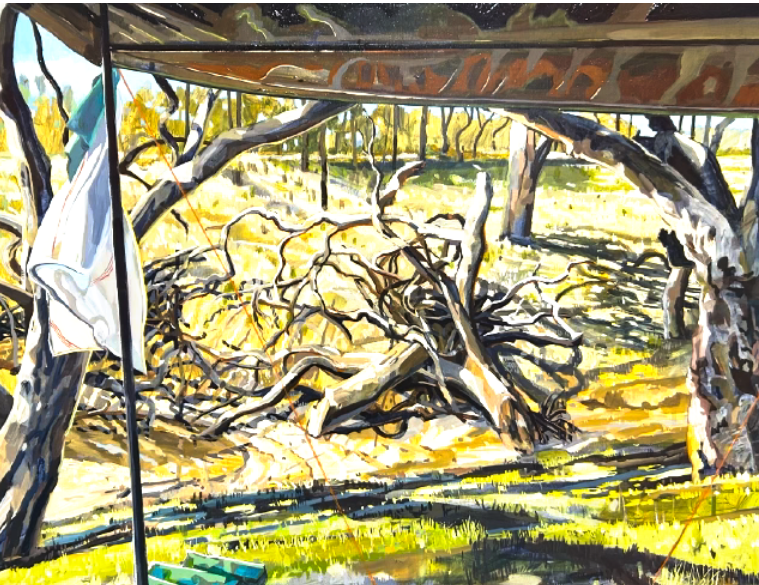
Helen Demczuk
Helena Demczuk is an Tasmanian painter based in Queenstown on Tasmania's west coast, whose work explores the connections between people, landscape and the environment. Her paintings reflect a fascination with colour, light and the changing character of place, often revealing the subtle relationships between the natural world and human experience.
Born in Victoria's Latrobe Valley to Ukrainian migrant parents, Helena studied art in Victoria and Queensland before undertaking studies in Ukrainian language and literature at Monash University. She later completed a Bachelor of Fine Arts at the University of Tasmania in 2005, including a semester at the Glasgow School of Art.
Together with fellow artist Raymond Arnold, Helena established Landscape Art Research Queenstown (LARQ), an artist-run studio, gallery and residency program that contributed to the development of Queenstown's contemporary arts community.